 Astrand Electronic
Electronic Fiber Tensile Strength Test Machine (Single Column ) ASTRAND
View more




中文
English


24-Hour Hotline
+86 130 6682 0203 Sarah

E-mail Us
sarah@astrand-martindale.com

Categories
New Products


Definition and Overview of Martindale Pilling Test
Time: 2024-10-25 13:46:22
Author: Sarah
From: Dongguan Astrand Electronic Technology Co.,Ltd
Click:
Introduction
In textile quality control, abrasion resistance and pilling resistance are one of the important indicators to measure fabric quality. Consumers have extremely high requirements for the appearance and durability of clothing, especially when facing pilling problems, which often affect purchasing decisions and overall satisfaction with the product. To solve this problem, the textile industry has gradually adopted standardized test methods to evaluate the pilling performance of fabrics. As one of the internationally recognized pilling test methods, the Martindale pilling test has been widely used in textile quality control. This article will introduce in detail the definition, test principle, operation steps, influencing factors, data processing and importance of the Martindale pilling test in practical applications.
I. Definition of Martindale Pilling Test
1.1 What is pilling?
Pilling refers to the phenomenon that fibers detach from the surface of the fabric and entangle into small balls during friction or wearing. Pilling not only affects the appearance of the fabric, but also may reduce the wearing comfort and durability of the fabric. Pilling is common in fabrics with short fiber length and low twist, especially blended fabrics. The severity of pilling depends on many factors, such as the physical properties of the fiber, the fabric structure and the conditions of use.
1.2 Definition of Martindale Pilling Test
The Martindale Pilling Test, also known as the Martindale Abrasion Test, is a standardized test method that simulates the friction that a fabric is subjected to during actual use to evaluate its pilling tendency. This test method was developed by the British Standards Institution and is widely adopted by the International Organization for Standardization (ISO) and the American Society for Testing and Materials (ASTM). It has high reliability and repeatability.
The core of the Martindale Pilling Test is to cyclically rub the fabric sample through a standard friction instrument, visually evaluate the pilling phenomenon on the fabric surface, and finally measure the anti-pilling performance of the fabric through a graded scoring method.
II. Overview of Martindale Pilling Test Standards
2.1 International Standards
2.1.1 ISO 12947 Series
The ISO 12947 series of standards developed by the International Organization for Standardization (ISO) is the core framework of the Martindale Pilling Test. The main standards include:
• ISO 12947-2:1998: This standard specifies the test of fabric anti-pilling under the Martindale method, involving the determination of specimen fracture. This section provides detailed instructions for sample preparation, equipment requirements and result recording.
• ISO 12947-3:1998: It focuses on the mass loss of samples during the test, and provides a more accurate basis for the evaluation of anti-pilling by quantitatively analyzing the mass change of samples during the friction process.
• ISO 12947-4:1998: This standard determines the changes in the appearance of fabrics during friction, including the evaluation of pilling, color difference and other phenomena, providing a reference for the practical application of fabrics.
2.2. American Standards
2.2.1 ASTM D4966-2010
The ASTM D4966 standard developed by the American Society for Testing and Materials (ASTM) is not only used to evaluate the abrasion resistance of fabrics, but also covers the test of pilling performance. The standard describes the test methods, equipment requirements and data processing steps in detail to ensure the accuracy and consistency of the test results.
2.3. European Standards
2.3.1 EN ISO 12947 Series
In the EU, the Martindale pilling test also follows the ISO standard, which mainly includes the following parts:
• EN ISO 12947-2:1998: Consistent with ISO 12947-2, it focuses on the determination of specimen fracture.
• EN ISO 12947-3:1998: Corresponding to ISO 12947-3, it focuses on the determination of mass loss and provides a detailed analysis method for the anti-pilling performance of fabrics.
• EN ISO 12947-4:1998: Test method for determining changes in fabric appearance, ensuring international compatibility of the test.
2.4. Chinese standards
2.4.1 GB/T 21196 series
China's national standards (GB) also draw on international standards, mainly including:
• GB/T 21196.2-2007: Corresponding to ISO 12947-2, suitable for fabric anti-pilling test.
• GB/T 21196.3-2007: Consistent with ISO 12947-3, focusing on the mass loss of samples, and providing data support for anti-pilling performance.
• GB/T 21196.4-2007: Consistent with ISO 12947-4, mainly testing appearance changes, providing a basis for products with high requirements for beauty and functionality on the market.
3. Testing principle of Martindale pilling test
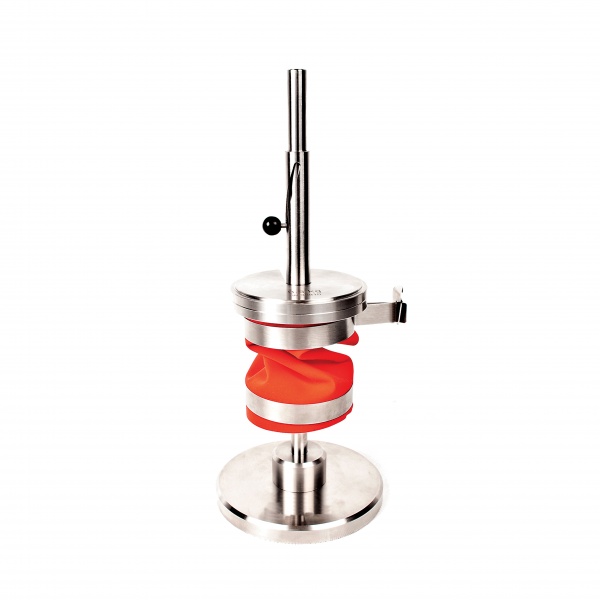
The basic principle of Martindale pilling test is to simulate the friction force of fabric in actual wearing process through a specific friction device, and then evaluate whether the fibers on the surface of the fabric will fall off from the main body of the fabric and entangle into balls. The core equipment of the test is the Martindale tester, which applies friction pressure to the fabric through multi-directional, continuous and consistent friction movement, thereby simulating the friction effect of wearing under different conditions.
3.1 Equipment introduction
The Martindale tester usually consists of the following key components:
• Friction head: used to fix the fabric sample and contact with the friction material.
• Friction material: usually standard wool felt or other specified materials are selected to rub the surface of the fabric sample.
• Load device: provide a certain pressure to the friction head to ensure the stability and consistency of the friction process.
• Motion device: The motion trajectory of the Martindale tester is a standardized Lissajous trajectory, which can ensure the multi-directionality of friction, thereby more realistically simulating the friction on the fabric surface during actual wearing.
3.2 Test process
The test process implements the friction test on the fabric by fixing the sample, setting the pressure and the number of friction cycles. Usually, the test will carry out a series of standard friction cycles, and then the surface condition of the sample will be scored by manual or automatic equipment. The scoring is based on the severity of pilling on the fabric surface, and a five-point system is usually used to evaluate the pilling performance of the fabric:
• 1 point: Very serious pilling, with a large number of balls on the surface.
• 2 points: Severe pilling, with obvious balls on the surface.
• 3 points: Moderate pilling, with some small balls on the surface.
• 4 points: Slight pilling, with a small number of balls on the surface.
• 5 points: No obvious pilling, the surface is smooth and clean.
After the test is completed, the anti-pilling performance of the fabric is evaluated by comprehensive scores and observations.
III. Operation steps of Martindale pilling test
3.1 Sample preparation
• Sample size: According to standard requirements, fabric samples need to be cut into a circle with a diameter of 38 mm or a rectangle of specified size.
• Number of samples: To ensure the reliability of the test results, 4 to 6 samples are usually required for repeated testing.
• Sample pretreatment: Depending on the test standard, the sample may need to be pretreated under specific temperature and humidity conditions, such as 65% relative humidity and 20°C for 24 hours.
3.2 Equipment setup
• Selection of friction material: Depending on the type of fabric and the test standard, the friction material generally uses wool felt or other standard materials. Ensure the uniformity and cleanliness of the friction material.
• Pressure applied: Depending on the type of fabric, the pressure applied to the friction head is usually between 9 and 12 kPa. Ensure that the friction pressure remains consistent throughout the test.
• Friction cycle setting: According to standard requirements, the number of friction cycles for the test is usually set to 1000, 5000, 7000 or more times. A higher number of friction cycles is suitable for evaluating the durability of the fabric and its performance after long-term wear.
3.3 Test start
• Sample fixation: Fix the prepared fabric sample on the friction head to ensure that it is in full contact with the friction material and is flat and wrinkle-free.
• Start the equipment: Start the Martindale tester and make it perform friction test according to the set number of friction cycles and trajectory. During the whole test process, the equipment will automatically record the number of friction cycles and the pressure applied.
• Regular inspection: According to the test requirements, after reaching the predetermined number of friction cycles, stop the equipment and evaluate the pilling phenomenon on the sample surface.
3.4 Evaluation and Recording
After the test, the pilling degree of the fabric is scored according to the standard visual evaluation method. The evaluator usually uses a magnifying glass or microscope to observe the surface of the fabric and compares the pilling of the sample with the reference standard picture. After the evaluation is completed, the score of each sample is recorded and the average score is calculated as the final anti-pilling performance evaluation.
IV. Evaluation method of Martindale pilling test
The Martindale pilling test is an important method for evaluating the anti-pilling performance of fabrics. It measures the ability of the fabric surface to form small ball-like fiber aggregations by simulating friction and wear. The following are the main evaluation methods of Martindale pilling test, including different evaluation methods and their applicability.
4.1. Sample break method
4.1.1 Method overview
The sample break method evaluates the anti-pilling performance of fabrics by testing the number of times the sample breaks during friction. This method is easy to operate and suitable for quickly evaluating the anti-pilling ability of different fabrics.
4.1.2 Applicability
This method is suitable for daily household fabrics, clothing materials, etc., where the anti-pilling performance is not required. Because the results are intuitive and easy to understand, it is widely used in production and research fields.
4.2. Mass loss method
4.2.1 Method overview
The mass loss method evaluates the anti-pilling performance of fabrics by measuring the mass change of the sample before and after the test. Weighing before and after the test can quantitatively analyze the impact of pilling on the fabric.
4.2.2 Applicability
This method is suitable for scenarios where in-depth analysis of fabric durability is required, especially in the fields of high-end fabrics, sportswear and professional clothing, and can better reflect the performance and durability of the fabric.
4.3. Appearance change method
4.3.1 Method overview
The appearance change method evaluates the anti-pilling performance by observing the pilling, wear and other phenomena on the fabric surface after friction. This method usually combines visual evaluation with quantitative analysis.
4.3.2 Applicability
Suitable for application scenarios with high requirements on appearance, such as fashion clothing, home textiles, etc. In practical applications, the appearance changes of fabrics can be systematically evaluated through photographic records and image analysis.
4.4. Quantitative evaluation
4.4.1 Method overview
In recent years, some test equipment has introduced quantitative evaluation technology, using image recognition and computer software to score the pilling degree of fabrics. This method provides more objective and accurate data.
4.4.2 Applicability
Suitable for high-end markets and scientific research fields, it can provide manufacturers with detailed quality analysis to help optimize product design and material selection.
4.5. Evaluation standards and grading
In the Martindale pilling test, the evaluation results are usually graded according to relevant international and domestic standards. For example, the pilling grade is divided from 0 to 5, where 0 means no pilling and 5 means severe pilling. Through standardized evaluation, manufacturers and consumers can have a clearer understanding of the anti-pilling performance of fabrics and make more informed choices.
V. Factors Affecting the Results of the Martindale Pilling Test
Although the Martindale Pilling Test is a standardized test method, its results are still affected by a variety of factors. Understanding these factors can help improve the accuracy and repeatability of the test results.
5.1. Fiber Type
Different types of fibers show significant differences in pilling performance. Common fibers and their characteristics include:
Natural fibers: such as wool and cotton, are generally more prone to pilling, especially wool due to its loose structure, which is easy to form small pills.
Synthetic fibers: such as polyester and nylon, are generally more resistant to pilling, but their surface smoothness may also cause pilling.
5.2. Fabric Structure
The weave and density of the fabric directly affect the degree of pilling:
Weave: Tightly woven fabrics are generally more abrasion-resistant and less prone to pilling.
Fabric thickness: Thicker fabrics may form more friction points during friction, thereby increasing the risk of pilling.
5.3. Friction conditions
The parameters of friction are a key factor in pilling testing:
Friction intensity: Higher friction will accelerate the formation of pilling.
Number of frictions: Pilling tends to increase with increasing number of frictions.
Friction materials: The type of material used for friction (e.g., type of abrasive) can also affect test results.
5.4. Temperature and humidity
The temperature and humidity of the test environment have a significant effect on the performance of the fabric:
Humidity: In a high humidity environment, the fiber may absorb moisture and swell, thus affecting friction behavior and pilling.
Temperature: Extreme temperatures may change the physical state of the fiber and affect pilling.
5.5. Post-processing process
The post-processing of the fabric during production can affect its anti-pilling ability:
Anti-pilling finishing: Use chemical or mechanical treatment to improve anti-pilling performance.
Surface treatment: Coating or special finishing can reduce friction and reduce the risk of pilling.
5.6. Use conditions
The conditions of the fabric in actual use can also affect the pilling:
Cleaning frequency: Frequent cleaning can affect the structure of the fabric and cause pilling.
Usage: High-frequency friction (e.g., sitting, lying, rubbing) can accelerate the occurrence of pilling.
5.7. Other factors
Fiber length: Short fibers are more susceptible to pilling than long fibers because they are more likely to fall off and gather into balls.
Dyeing and printing: Dyes and printing processes may affect the strength of fibers, which indirectly affects pilling.
The Martindale pilling test is an important tool for evaluating the anti-pilling performance of fabrics and is widely used in many industries. The following are some specific case studies that demonstrate the importance and effectiveness of this test in practical applications.
VI. Practical application case analysis
6.1. Furniture industry
Case background
A home furnishing brand has launched a new sofa designed to meet the requirements of young families for durable and beautiful soft furnishings. In order to ensure the anti-pilling performance of the fabric, the brand decided to conduct the Martindale pilling test.
Test process
• Sample selection: Choose from a variety of fabrics, including cotton and linen blends, polyester and suede.
• Test execution: Test according to Martindale standards and record the pilling of each fabric during friction.
Result analysis
The test results show that the pilling phenomenon of polyester fabrics after 50,000 times of friction is significantly lower than that of cotton and linen blended fabrics. The brand therefore decided to use polyester material in its new sofas to enhance product durability and customer satisfaction.
6.2. Clothing industry
Case background
A sportswear brand wanted to launch a high-performance running suit that emphasized wear resistance and anti-pilling features. To do this, the brand conducted a series of Martindale pilling tests.
Test process
• Sample preparation: Choose fabrics of varying compositions, including nylon and polyester blends.
• Test execution: Each fabric is tested for pilling under standard conditions, simulating wear and tear during sports.
Result analysis
The results show that polyester blended fabrics have better pilling resistance than pure nylon fabrics. The brand finally chose polyester blend as the main fabric, which successfully improved the market competitiveness and consumer feedback of running clothes.
6.3. Automotive industry
Case background
An automobile manufacturer pays special attention to wear resistance and anti-pilling properties in the selection of interior fabrics for new models to improve consumers' experience.
Test process
• Sample Selection: Compare a variety of interior fabrics, including synthetic leather and fabric.
• Test execution: Evaluate performance under different friction conditions using the Martindale pilling test.
Result analysis
Test results show that synthetic leather exhibits lower pilling under high-intensity friction and is suitable for long-term use. The manufacturer ultimately decided to use this fabric, which significantly improved the model's user satisfaction and reviews.
6.4. Interior decoration industry
Case background
An interior decoration company hopes to launch a series of high-end curtain fabrics and needs to ensure its anti-pilling properties to adapt to use in different environments.
Test process
• Sample selection: Choose from a variety of materials including silk, linen and synthetic fibers.
• Test execution: Martindale pilling tests were conducted under standard laboratory conditions to monitor how each material behaved after friction.
Result analysis
Test results show that the pilling phenomenon of synthetic fiber fabrics is much lower than that of natural fibers. The company decided to promote synthetic fiber curtains and received positive feedback from the market, with sales increasing significantly.
VII. Data processing of Martindale pilling test
Data processing of the Martindale pilling test is a key step in evaluating the pilling resistance of fabrics. Proper data processing ensures the accuracy and reliability of test results. The following are the main steps and methods of data processing:
7.1. Data collection
After the test is completed, the basic information of the sample needs to be recorded first, including:
• Fabric type
• Test conditions (temperature, humidity, etc.)
• Type of abrasive
• Number of frictions
Record the condition of the pilling sample, including:
• Amount of pilling
• Pilling size (measured by visual or image analysis)
7.2. Data sorting
Organize the collected data to ensure its clarity and consistency. You can use spreadsheet software (such as Excel) or professional data analysis software to input and organize data, and set unified formats and units.
7.3. Quantitative analysis
Quantitative analysis based on test results usually includes the following aspects:
• Pilling count: Count the total number of pills produced on the sample.
• Pilling area measurement: Measure the area of the pilling area through image analysis software to obtain a more accurate degree of pilling.
• Pilling rating: Rating the pilling phenomenon based on industry standards or internal standards, usually using visual assessment combined with quantitative analysis.
7.4. Data comparison
Compare the test results with standard values or other samples to evaluate the fabric's anti-pilling properties. For example, the pilling results of different types of fabrics under the same test conditions can be compared to determine the performance.
7.5. Statistical analysis
Perform statistical analysis to draw meaningful conclusions. The following methods can be used:
• Descriptive statistics: Calculate metrics such as mean and standard deviation to provide a general overview of sample performance.
• Analysis of Variance (ANOVA): Compares the differences between multiple samples to determine the significance of different fabrics in their anti-pilling properties.
• Regression analysis: Analyze the impact of different factors (such as the number of frictions, applied pressure, etc.) on the pilling results.
7.6. Results reporting
Finally, the results of data processing need to be compiled into a report, including:
• Test purpose and method
• Data analysis results and charts
• Conclusions and recommendations
The report should be clear and easy to understand for manufacturers, designers and consumers to refer to.
in conclusion
Through scientific data processing, the Martindale Pilling Test can provide a reliable basis for evaluating the anti-pilling performance of fabrics. This not only helps manufacturers optimize material selection, but also provides consumers with important reference information when purchasing.
VIII. The significance of Martindale pilling test in practical applications
8.1. Improve product quality
The Martindale pilling test allows manufacturers to clearly identify how different fabrics perform under abrasive conditions. Test results help companies adjust material selection and production processes, thereby significantly improving product quality. For example, when a certain brand was developing a new sofa fabric, it conducted multiple pilling tests to determine the best fabric combination. This not only improved the durability of the fabric, but also reduced consumer complaints due to pilling.
8.2. Meet market demand
As consumers' requirements for product quality and durability increase, the Martindale Pilling Test provides companies with a scientific basis. Enterprises can use test results to promote the superior performance of products and enhance market competitiveness. For example, a certain home furnishing brand passed a pilling test to show consumers that its fabrics had almost no pilling after 5,000 times of rubbing, successfully attracting quality-conscious consumers.
8.3. Compliance with regulations and standards
The Martindale Pilling Test is an integral part of many industry standards, including international and regional standards. By following these standards, companies can not only ensure product compliance but also avoid legal liability arising from quality issues. For example, automotive interior materials are often required to meet specific wear and pilling resistance standards, and Martindale testing plays an important role in this process.
8.4. Support sustainable development
In today's society, environmental protection and sustainability are getting more and more attention. By conducting the Martindale pilling test, companies can choose more durable materials and reduce product replacement frequency, thereby reducing resource consumption and waste generation. This not only meets environmental protection requirements, but also enhances brand image. For example, some home textile companies select sustainable materials through pilling testing to ensure that their products will still have good appearance and performance at the end of their service life.
8.5. Promote technological innovation
The application of the Martindale pilling test drives the development of new materials and technologies. During the testing process, companies may discover deficiencies in wear resistance of traditional materials, thus stimulating research and development of new synthetic fibers or modified materials. For example, some brands have significantly improved the anti-pilling properties of materials by introducing nanotechnology-treated fabrics and have achieved success in the market.
8.6. Data-driven decision-making
In modern production management, data-driven decision-making is increasingly important. The results of the Martindale Pilling Test provide companies with quantitative data support to help them make more informed decisions. For example, by analyzing pilling test data from different batches of materials, production managers can identify quality fluctuations from material suppliers and adjust procurement strategies to ensure product consistency.
8.7. Enhance consumer trust
Through open and transparent pilling test results, companies can enhance consumer trust in their products. When consumers see that a product has passed rigorous testing and received high scores, they are more likely to purchase the product. For example, a home furnishing brand disclosed pilling test results on its website and provided detailed test reports for each fabric, successfully increasing brand loyalty.
VIIII. Summary
As a standardized and scientific evaluation method, the Martindale Pilling Test occupies an important position in the anti-pilling performance of textiles. Its testing principle is based on repeated friction to simulate the wear and tear that the fabric may encounter in actual use, thereby effectively evaluating its durability. Rigorous operating procedures, including sample preparation, friction testing and result evaluation, ensure the accuracy and reliability of the test.
There are many factors that affect the test results, such as the fiber composition, density, weaving process and post-processing methods of the fabric. These factors not only affect the degree of pilling but may also affect the overall performance of the fabric. Therefore, textile manufacturers need to have a deep understanding of these variables to control product quality more effectively.
In practical applications, the results of the Martindale Pilling Test provide companies with clear guidance to help make more informed decisions on material selection and product design. In addition, as new materials and technologies continue to emerge, the Martindale test is constantly being optimized and is expected to be combined with advanced detection technologies, such as image recognition and data analysis, in the future to improve the accuracy and efficiency of the test. This will provide stronger technical support for the sustainable development of the textile industry and help companies maintain a competitive advantage in the market.

点击右上角
分享给朋友吧







 Long by picture save/share
0
Your liking is the energy source that I persist in writing
YouArticle
已有0人推荐
CONTACT US
 No. 94, Chenwu Section, Guantai Road, Houjie
Town, Dongguan City
 E-mail: sarah@astrand-martindale.com
jack@astrand-martindale.com
 Tel: (+86) 186 8867 2626 Jack
 Tel: (+86) 130 668 20203 Sarah
HOT TAGS
LATEST NEWS
SUBSCRIBE
Please read on, stay posted, subscribe, and we welcome you to tell us what you think.
Copyright © 2022 Dongguan Astrand Electronic Technology Co., Ltd. All Rights Reserved | Log in
Copyright © 2022 Dongguan Astrand Electronic Technology Co., Ltd. All Rights Reserved