 Astrand Electronic
Electronic Fiber Tensile Strength Test Machine (Single Column ) ASTRAND
View more




中文
English


24-Hour Hotline
+86 130 6682 0203 Sarah

E-mail Us
sarah@astrand-martindale.com

Categories
New Products


Board – Analyzing Bursting Strength
Time: 2023-12-22 12:20:41
Author: Sarah
Click:
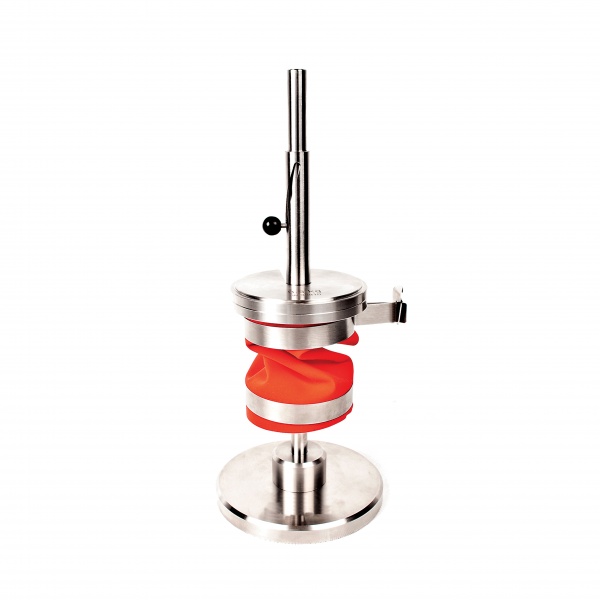
The evaluation of paper or paperboard's bursting strength is a composite measure influenced significantly by various factors, notably tensile strength and stretch. Its determination hinges upon the intricate interplay of fiber composition, preparation techniques, refining processes, sheet formation dynamics, and additive integration. Employing a Mullen tester, the assessment involves subjecting a secured test specimen to escalating hydraulic pressure via a rubber diaphragm until rupture occurs. The pressure registered at the point of rupture defines the bursting strength, typically measured in pounds per square inch or "points". Commonly termed the "Mullen", "pop test", or simply the "burst", this measurement technique differs notably for paperboard compared to lighter papers due to the utilization of a heavier Mullen tester and a larger diaphragm opening.
- Bursting Strength Testing:
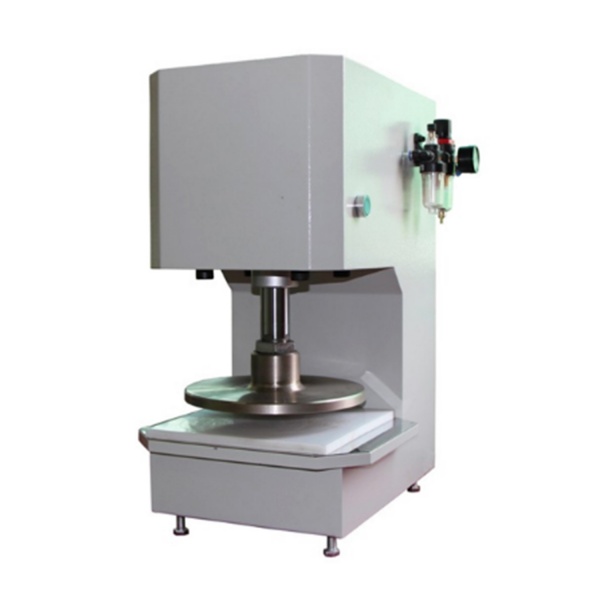
The Bursting Strength Tester, often referred to as the Mullen Test, is instrumental in evaluating the resilience of corrugated board walls under applied force. This procedure involves utilizing hydraulic pressure to expand a rubber diaphragm against the corrugated box walls until rupture occurs, measuring the bursting strength in Kilograms per square centimeter. Calculating the Bursting factor involves multiplying the bursting strength by a thousand and dividing it by the grammage of the board.
XD-A02 Bursting Strength Tester

| Measuring range | 70~1600kpa (paper), 150~5600kpa (corrugated cardboard) |
| Power Resolution | 1/100000 |
| Data analysis sampling | sampling frequency 400 times/second |
| Force accuracy | ±0.1% of indicated value (20~100%FS) |
| Accuracy | ≤±0.5% |
| Resolution | 0.01kpa |
| Deformation error | ≤1mm |
| Concentricity of upper and lower discs | ≤0.25mm |
| Film convex plate pressure | (9±0.2)mm/(30±5)kPa |
| Oil delivery speed | 95±5ml/min (paper), 175±5ml/min (corrugated cardboard) |
| Platen Diameter | Diameter of upper plate: 30.5±0.1mm; diameter of lower plate: 33.1±0.1mm (paper) Diameter of upper plate: 31.5±0.1mm; diameter of lower plate: 31.5±0.1mm (corrugated cardboard) |
| Human-machine interface | 7in touch screen |
| Test control | with delay pressurization control, with decompression delay control |
| Clamping force | 100kpa~1200kpa (adjustable), with voltage stabilization function to ensure stable holding force |
| Oil cup system | high-strength and high-pressure oil circuit sealing system, with double sealing knob, 25mm high-pressure 30 stainless steel oil pipe |
| Circuit board chip protection | comes with a water vapor filter device to protect the stability of the circuit device |
| Calibration system | Self-contained calibration system, self-contained manual pressurization and decompression control system |
| Test head material | the cylinder part, the upper clamping part and the lower clamping part are all 304 stainless steel |
| Safety device | with safety cover, with power supply anti-interference protection module |
| Language switch | Free switch between Chinese and English |
| Unit conversion | Kg/cm2, kpa, lbf/in2 |
| Printout | Modular all-in-one thermal printer |
- Determining Bursting Strength in Corrugated Sheets:
The Mullen test serves as an efficient means of assessing various materials, including paper, cardboard, corrugated sheets, and fabrics. It serves as a critical tool for evaluating the strength and quality of containers made from these materials. By precisely measuring the force needed to rupture a material sheet, the Mullen test assists in gauging its endurance and strength. However, it's essential to note that the test results do not directly correlate to the weight or product capacity per inch of the box; additional tests like edge crush, ring crush, and box compression are necessary for a comprehensive evaluation.
- Bursting Strength Test and Formulas:
The Mullen test yields the specimen's bursting strength, a pivotal parameter for assessing strength and determining the bursting factor—an indicator of endurance. The bursting factor is derived from a formula that considers bursting strength and the material's grammage.
Burst factor = Burst strength (gf/cm²) / Grammage (grams/m²)
The bursting strength value originates from the Mullen test, while Grammage represents the material's GSM. Similarly, the formula for bursting index also utilizes bursting strength and grammage, but expresses pressure in kPa:
Burst Index = Burst strength (kPa) / Grammage (Kg/m²)
This formula converts the bursting strength from gf/m² to kPa, with GSM measured in kg/m², typically determined using a GSM cutter and a weighing scale. These calculated values provide critical insights into material strength, facilitating optimization for enhanced performance.

点击右上角
分享给朋友吧







 Long by picture save/share
0
Your liking is that I persist in using the energy device
YouArticle
已有0人推荐
CONTACT US
 No. 94, Chenwu Section, Guantai Road, Houjie
Town, Dongguan City
 E-mail: sarah@astrand-martindale.com
jack@astrand-martindale.com
 Tel: (+86) 186 8867 2626 Jack
 Tel: (+86) 130 668 20203 Sarah
HOT TAGS
LATEST NEWS
SUBSCRIBE
Please read on, stay posted, subscribe, and we welcome you to tell us what you think.
Copyright © 2022 Dongguan Astrand Electronic Technology Co., Ltd. All Rights Reserved | Log in
Copyright © 2022 Dongguan Astrand Electronic Technology Co., Ltd. All Rights Reserved