 Astrand Electronic
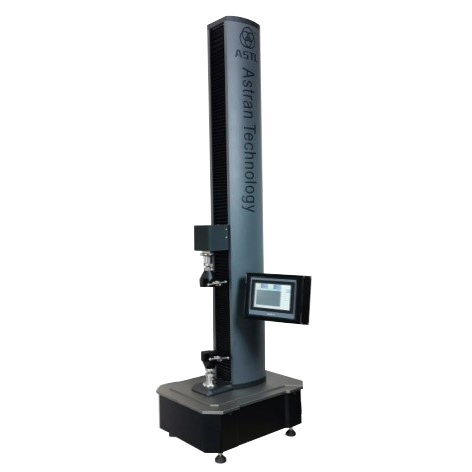
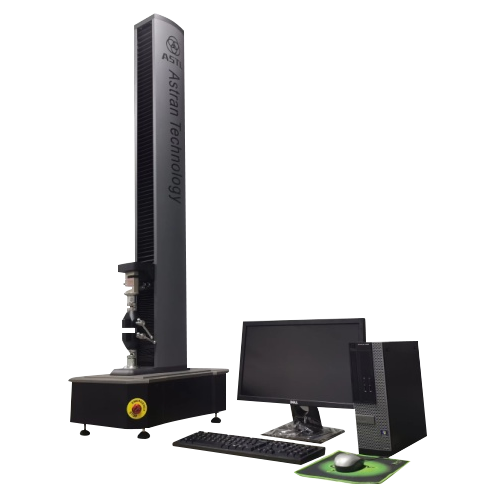
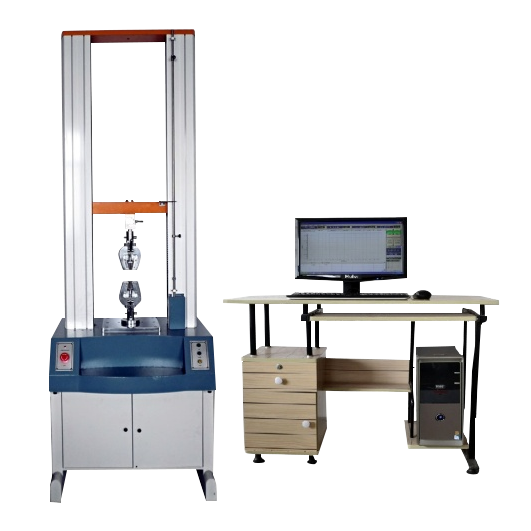
Electronic Fiber Tensile Strength Test Machine (Single Column ) ASTRAND
View more




中文
English


24-Hour Hotline
+86 130 6682 0203 Sarah

E-mail Us
sarah@astrand-martindale.com

Categories
New Products


Yarn Twist Measurement Techniques
Time: 2023-12-25 15:17:16
Author: Sarah
Click:
Yarn Twist Measurement:
Yarn twist serves as the cornerstone in binding staple fibers to create a resilient and continuous yarn. Traditionally, the yarn twist level is determined using the untwist-twist method on a yarn twist tester. Alternatively, in digital analysis, yarn twist can be indirectly assessed by gauging the angle between the fiber helix tangent and the yarn axis in images.
Fibers available for evaluation are categorized based on spatial location and color into two types: surface fibers and tracer fibers. Surface fibers follow twisting curves on the yarn's main body, while tracer fibers, often a minute percentage of colored fibers, are intentionally introduced during spinning, typically in black. Unlike surface fibers, most tracer fibers are distributed within the yarn structure, exhibiting similar geometrical and migrational properties to other fibers.
Tracer fibers play a critical role in tracing the actual fiber path within the spun yarn, facilitating comprehensive structural analysis. To capture tracer fibers, the yarn sample is often immersed in a specialized solvent trough to selectively dissolve fibers based on distinct refractive indexes. In contrast, imaging yarn surface fibers doesn't necessitate such preparatory steps during analysis.

A tracer fiber image captured by CCD camera
Twisted yarns experience breakage when the highly strained central fibers reach their break extension. Consequently, both the yarn and fiber exhibit similar break extensions, resulting in a proportional reduction in strength and modulus. This article will intricately explore a range of professional techniques employed for measuring yarn twist.
Yarn Twist Measurement Methods:
Direct Counting Method:
Conducted at 20°C ± 2°C and 65% ± 4% relative humidity, this method involves discarding twenty-five meters of yarn per package. Extracting the sample using side-end withdrawal, preferred over the over-end method to prevent additional twist, aligns with ASTM D1423-99, specifying twenty-five spun yarn specimens and eight filament yarn specimens.
Spun Single Yarn:
Using a movable clamp gauge slightly shorter than the staple fiber length, maintain a tension of 0.25 ± 0.05 cN/tex. Rotate the clamp until yarn fibers align completely, counting rotations to determine twist in a specific clamp length and calculate turns per unit length.
Filament Single Yarns:
Adjust the clamp gauge length to 250 ± 0.5 mm or 10 ± 0.02 in, mounting the specimen at 0.25 ± 0.05 cN/tex tension from both ends. Rotate the clamp until monofilaments align, verified by passing a needle through the strand. Count rotations to calculate turns per unit length.
Folded Yarn:
Referring to ASTM D1423-99, use a 250 ± 0.5 mm or 10 ± 0.02 in clamp gauge length at 0.25 ± 0.05 cN/tex tension from both ends. Place the specimen in a twist device, untwisting until all strands are free, then count turns to calculate turns per unit length.
Continuous Twist Tester:
Designed for higher throughput, this tester rotates yarn from a jaw end onto a rotatable drum. Twist is measured by untwisting and retwisting a specific length; an instrument determines twist per unit length after twist removal and reinstatement onto the yarn.
Untwist and Retwist Method in Twist Testing:
The tension-type twist tester operates on the principle of twist contraction and is often referred to as the untwist-re-twist method. As the twist level increases, the yarn contracts in length, and upon removing the twist, the length extends; reaching maximum length when all the twist is removed. This method is employed with equipment where one end of the yarn is attached to a counter while the other end is connected to a weight-pointer system.
During untwisting, the yarn's length extends, causing the pointer to shift from right to left, indicating a slight length change. As the twist is fully removed, the yarn reaches its maximum length, and the pointer halts its movement. However, continuous rotation of the jaw beyond this point causes length contraction due to twist insertion. At the critical point just before length contraction, the untwisted twist represents the yarn's twist level, indicated by the instrument.
The tension-type twist tester features fixed and rotating jaws for securing the yarn. The non-rotating jaw's position is adjustable based on the desired gauge length. A pointer, linked to the rotating jaw, moves along a scale with two graduations, indicating the twist level.
Twist Measurement Procedure:
Initiate by disengaging the discs from the worm, aligning the pointer with the index mark. Secure the yarn in the fixed clamp, thread it through the rotating jaw, and adjust until the pointer aligns with the zero line on the scale. Close the jaw to establish a nominal gauge length under slight tension.
As twist is removed, the yarn elongates, causing the pointer to reach a vertical position. Continuing to rotate the jaw in the same direction removes all twist and then introduces enough twist to bring the pointer back to the zero mark. Record the dial reading when alignment occurs and calculate twists per inch using:
Twists per inch = Dial reading / (Gauge length × 2)
Automatic Yarn Twist Testers:
Automatic twist testers like the Zweigle D302 and USTER ZWEIGLE TWIST TESTER-5 execute numerous twist tests employing untwist-twist methods, often utilizing specialized tensioning systems. These instruments are widely employed in twist measurement for their efficiency and precision.

Fig: TWIST TESTER
| Measurement range | for all kinds of yarns |
| Yarn tension | adjustable by a set of weights depending on the type of yarn |
| Rotating speed of gripper | 1000 r/min, 800 r/min, slow inching speed |
| Length of measurement | 25, 50, 100, 200, 250, 500 mm |
| Measurement quantity | no more than 99 cycles |
| Measurement method | a. Direct counting method; b. Untwist-retwist method; c. Double untwist-retwist method; d. Three-time untwist-retwist metho |
| Method of measurement data output | a. Display output b. Print output(OPTIONAL): Xi for twist value of each test; for average twist value of each batch of tests; Nn for number of tests; N1for number of tests below the average twist; S for mean square deviation; H for coefficient of mean deviation; CV for coefficient of variation; and α for twist factor |
| Power source | 220V±10%, 50Hz |
| Power requirement | low than 25W (main unit) |
| Operational environment requirement | temperature 20oC±10oC twist value, and twist coefficient |
Sample Preparation:
1、Selection: Obtain an equal number of specimens of suitable length from diverse parts of each package. Specimen lengths may be 350 or 500 mm, comprising 10% of the available test samples. Before cutting each specimen, discard approximately 10 meters of yarn to maintain consistency.
2、Handling: Exercise caution during specimen retrieval to prevent unintended changes in yarn twist.
Working Procedure:
1、Setup: Place the yarn specimen on the left side of the instrument's yarn stand.
2、Guiding the Yarn: Direct the yarn through the yarn guide in a straight line toward the yarn bobbin and through the instrument’s fixed yarn guide at the tail end on the left side.
3、Using the Disc Yarn Gripper: Depress the center screw of the disc yarn gripper using the thumb and lift the outer cone with force using the middle finger of the left hand. Secure the yarn by drawing it through the gripper's opening, extending it slightly beyond the gauge length. Release the outer cone to secure the yarn.
4、Tension Application: Apply appropriate tension, gently release your hand from the revolving shaft, and use a sharp knife to trim any protruding yarn, ensuring the specimen is prepared for testing.
5、Starting the Test: Initiate the test by pressing the ‘Start’ button. Adjust the motor RPM to the specified speed criteria based on the yarn type:
- For Cotton Yarns: Set the motor speed to half of its maximum rotation speed.
- For High-Twist Filament Yarns: Set the motor speed to 75% of maximum.
Ensure adherence to these speed parameters while setting the motor speed for accurate testing.
Testing Single Yarns:
Upon completion of the untwist-retwist cycle, the test for single yarns concludes automatically. The display will promptly exhibit the direct result in TPI or TPM.
Testing Double and Plied Yarns:
For double and plied yarns, the test solely involves the untwist process, halting automatically at a predetermined value slightly lower (typically 2 to 3 units) than the calculated TPI. To release any remaining twist, carefully insert a sharp-edged needle between the opened double yarn at the specimen's extreme end (from the disk yarn gripper) towards the rotating jaw. Depress the ‘Start’ button once and reduce the motor’s speed to its minimum. As a result, the motor stops precisely after twist release, displaying the direct result in TPI on the instrument's display.

点击右上角
分享给朋友吧







 Long by picture save/share
0
CONTACT US
 No. 94, Chenwu Section, Guantai Road, Houjie
Town, Dongguan City
 E-mail: sarah@astrand-martindale.com
jack@astrand-martindale.com
 Tel: (+86) 186 8867 2626 Jack
 Tel: (+86) 130 668 20203 Sarah
HOT TAGS
LATEST NEWS
SUBSCRIBE
Please read on, stay posted, subscribe, and we welcome you to tell us what you think.
Copyright © 2022 Dongguan Astrand Electronic Technology Co., Ltd. All Rights Reserved | Log in
Copyright © 2022 Dongguan Astrand Electronic Technology Co., Ltd. All Rights Reserved