 Astrand Electronic
Electronic Fiber Tensile Strength Test Machine (Single Column ) ASTRAND
View more




中文
English


24-Hour Hotline
+86 130 6682 0203 Sarah

E-mail Us
sarah@astrand-martindale.com

Categories
New Products


Comprehensive Guide to Color Fastness Rating in Textiles
Time: 2025-07-07 14:33:09
Author: Sarah
From: Dongguan Astrand Electronic Technology Co.,Ltd
Click:
Comprehensive Guide to Color Fastness Rating in Textiles
Color fastness rating is a critical evaluation process used in the textile industry to determine a fabric’s resistance to color change and staining under various conditions. Accurate ratings help manufacturers, designers, and consumers ensure product quality, durability, and compliance with international standards.
This guide offers an in-depth overview of color fastness rating systems, evaluation methods, influencing factors, and practical best practices.
一.What Is Color Fastness Rating?
Color fastness rating assesses a textile's ability to maintain its original color when exposed to physical or chemical stresses such as washing, rubbing, perspiration, sunlight, and heat. Two main phenomena are evaluated:
- Color Change: The alteration in theoriginal shade or depth of the sample after testing.
- Color Staining: The degree to whichthe sample transfers dye to adjacent fabrics.
Rating Reference Standards
- Gray Scale for Color Change: Ranksfrom Grade 5 (no change) to Grade 1 (severe change).
- Gray Scale for Staining: Ranks fromGrade 5 (no staining) to Grade 1 (severe staining).
- Blue Wool Standards: Used forevaluating lightfastness; higher numbers indicate better resistance tofading.
二.Menthods of color fastness rating
Color fastness evaluations can be classified into two main approaches:
1. Visual Assessment (Subjective)
This method involves comparing test samples against standard reference scales under controlled lighting and background conditions.
Advantages:
- Closely reflects the visual perception of end-users.
- Preferred for fabrics with complex weaves or surface textures.
Disadvantages:
- Susceptible to human error and environmental factors.
Recommended Protocols:
- Evaluation must be conducted by at least three trainedraters.
- Average values are taken to reduce individual bias.
- Use standardized lighting and gray surroundings.
2. Instrumental Assessment (Objective)
Instrumental evaluation uses colorimetric devices like spectrophotometers and colorimeters to capture precise data.
Instruments and Measurements:
- Spectrophotometer: Measuresreflectance across the visible spectrum.
- Colorimeter: Calculates colordifferences using the CIE Lab* system.
- Standard observer angle: 10°; Standard illuminant: D65.
Limitations:
- Sensitive to surface irregularities.
- May not fully capture visual nuances such as gloss or texture.
Note: Visual evaluation remains the primary reference in quality control due to its practical relevance in consumer contexts.
三.Key Influencing Factors and Precautions
To ensure consistency and accuracy in ratings, several external and procedural variables must be carefully controlled:
1. Sample Conditioning
- Standard conditioning time: 4 hoursin a standard atmosphere (20°C ± 2°C, 65% RH ± 4%).
- Special case: Some tests likephenolic yellowing must be rated within 30 minutes.
2. Evaluation Environment
- Use a standard gray viewing booth with neutralsurroundings.
- Comply with:
- AATCC: Munsell N6-N8
- ISO/GB: Gray equivalent to Grade 1–2 of the gray scale
3. Lighting Requirements
- Light Source: D65 (6500K ± 200K)
- Illuminance:
- ISO/GB: ≥600 lux
- AATCC: ≥538 lux
- Light boxes should be regularly maintained, and bulbs replacedafter ~2,000 hours.
4. Rater Qualifications
- Must have normal color vision (validated by Ishihara test).
- No tinted glasses or visual impairment.
- Should wear neutral gray clothing during evaluation.
5. Observation Angles
- Method 1: Light at 90°, observation at 45°
- Method 2: Light at 45°, observation at 90°

四.Preparing Samples for Rating
Proper sample preparation is critical for valid results:
Sample Size and Mounting
- Avoid using small swatches alone — larger areas offer bettercolor perception.
- Use mounting boards without fluorescent brighteners.
- Do not use standard A4 office paper.
Specific Test Preparations
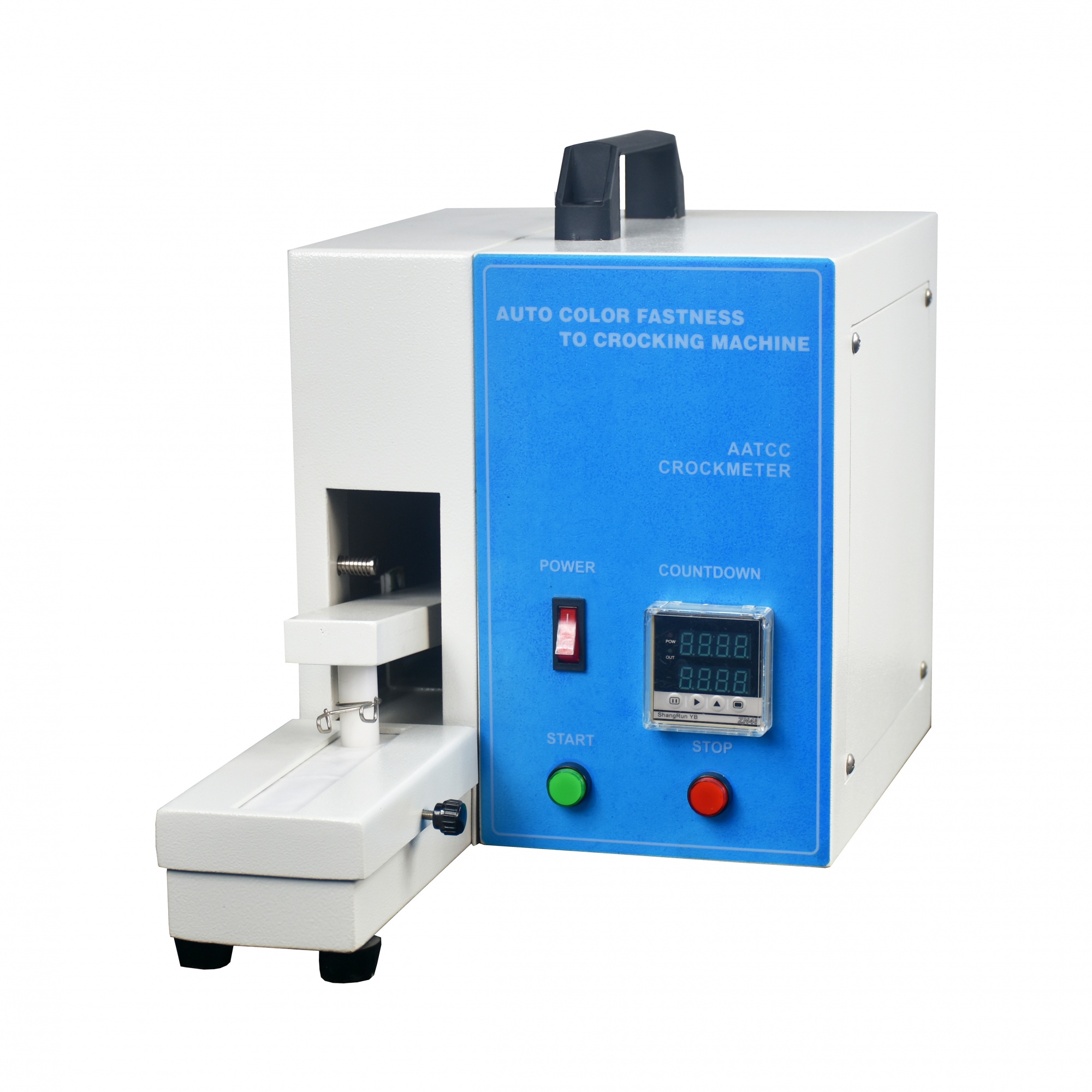
- Friction Fastness:
- Remove surface lint using transparent tape.
- Place three unused rubbing cloths beneath the sample.
- Color Change Evaluation:
- If background interferes, fold the sample for double-layered viewing.
Operator Behavior
- Avoid perfume, jewelry, nail polish, and emotional fatigue.
- Maintain focus and consistency during assessment.
五.Detailed Rating Procedure
- Pre-Rating Setup:
- Condition samples in a standard environment.
- Humidify if required (especially for phenolic yellowing or specific wet treatments).
- Acclimatize Evaluators:
- Sit under D65 lighting for 2 minutes before observation.
- Conduct the Evaluation:
- Use identical sample holders.
- Rate independently; avoid group discussions.
- Result Handling:
- Calculate the average score across all raters.
- If significant discrepancies arise, include a fourth evaluator.
- Sample Storage:
- Store in temperature- and humidity-controlled environments.
- Avoid using aged samples for future ratings.
六.Color Fastness Rating in Industry Applications
Color fastness ratings impact product development, manufacturing, regulatory compliance, and consumer satisfaction across:
- Apparel and Fashion: Ensuresconsistent shades in garments after washing or exposure.
- Home Textiles: Prevents staining inmixed-use products like upholstery and bedding.
- Technical Textiles: Crucial inperformance-critical areas such as automotive interiors, uniforms, andmedical fabrics.
七.Summary: Best Practices for Reliable Color Fastness Ratings
| Step | Best Practice |
Evaluation Method | Combine visual and instrumental where applicable |
Sample Conditioning | Minimum 4 hours in standard environment unless otherwise specified |
Lighting Conditions | D65 light source with ≥600 lux, standard gray environment |
| Rater Requirements | Minimum of three qualified raters, wear neutral clothing |
| Sample Handling | Follow mounting and preparation protocols based on test type |
Record keeping | Document evaluation details and maintain traceable records |
八.Final Thoughts
Accurate and consistent color fastness ratings are essential for maintaining product quality, brand reputation, and end-user satisfaction. Whether for laboratory testing or factory QC, following standardized procedures and controlling external variables ensures meaningful and reproducible results.
Need Help with Color Fastness Testing or Equipment?
ASTRAND offer expert consultation, test machines, and tailored guidance for textile labs and manufacturers.
???? WhatsApp: +86 13066820203
???? Email: sarah@astrand-martindale.com
Let’s elevate your textile quality standards—globally.

点击右上角
分享给朋友吧







 Long by picture save/share
0
Prev : Complete Guide to Textile Color Fastness
Next : Fundamentals of Woven Fabric Testing – Essential Testing Items Explained
Your liking is the energy source that I persist in writing
YouArticle
已有0人推荐
CONTACT US
 No. 94, Chenwu Section, Guantai Road, Houjie
Town, Dongguan City
 E-mail: sarah@astrand-martindale.com
jack@astrand-martindale.com
 Tel: (+86) 186 8867 2626 Jack
 Tel: (+86) 130 668 20203 Sarah
HOT TAGS
LATEST NEWS
SUBSCRIBE
Please read on, stay posted, subscribe, and we welcome you to tell us what you think.
Copyright © 2022 Dongguan Astrand Electronic Technology Co., Ltd. All Rights Reserved | Log in
Copyright © 2022 Dongguan Astrand Electronic Technology Co., Ltd. All Rights Reserved